FTC Disclosure
Updated July 2026
An FTC disclosure is the clear, conspicuous statement a US creator or affiliate must make when they have a material connection to a brand — such as being paid or earning a commission — so audiences know the content is an ad or endorsement.
The US Federal Trade Commission requires endorsers to disclose any material connection to a brand. In practice this means labels like #ad or 'paid partnership' on sponsored content, and a clear note that links may earn a commission on affiliate content.
Disclosures must be clear and hard to miss — placed near the claim, in plain language, not buried in a wall of hashtags or behind a 'more' link. Non-compliance can bring penalties for both the brand and the creator. Similar rules exist elsewhere, such as ASCI guidelines in India.
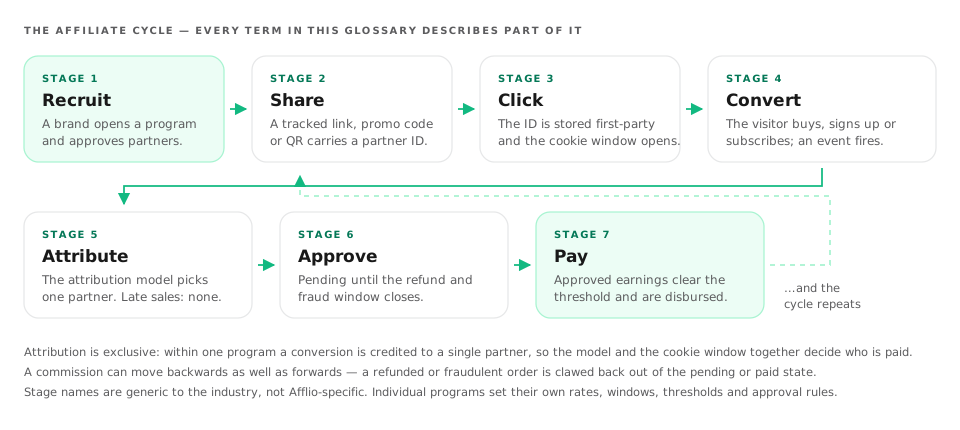
Where FTC Disclosure sits in the affiliate cycle
FTC disclosure is the United States expression of the share-stage obligation, and the one most widely cited internationally.
How FTC Disclosure actually works
The US Federal Trade Commission publishes endorsement guidance requiring that a material connection between an endorser and a brand be disclosed clearly and conspicuously. The connection can be payment, commission, free product, employment or a family relationship — anything a reasonable audience would not expect and might weigh differently if they knew.
The guidance is about effect rather than wording. It expects the disclosure to be hard to miss, in the same medium as the claim, close to it, and in plain language — which rules out burying it in a description, a footer, or a hashtag block at the end of a caption.
What FTC Disclosure means for a creator
The workable rule for a creator is to assume any relationship that could change how the audience reads the recommendation needs disclosing, and to place it where the audience meets the claim.
Format matters as much as presence. A spoken disclosure in a video, a written one in a caption, and a line above the first affiliate link in an article each fit the medium they are in, which is what the guidance actually asks for.
What FTC Disclosure means for a brand
The FTC has pursued brands as well as endorsers, so a program's terms requiring disclosure are a genuine control rather than boilerplate — provided somebody checks.
Supplying approved wording per format, and reviewing a sample of live placements, is materially more effective than a clause in the terms that no partner reads.
Common mistakes with FTC Disclosure
Hiding the disclosure in a hashtag block
A tag at the end of a long caption, among twenty others, is not conspicuous in the sense the guidance means.
Assuming it applies only to paid cash sponsorships
Commission, gifted product, employment and family relationships are all material connections. Affiliate commission is squarely covered.
Disclosing only on the website, not in the video or post
The disclosure has to be in the medium where the claim is made. A page on your site does not cover a recommendation made on a platform.
FTC Disclosure: common questions
Does FTC guidance apply to creators outside the United States?
It applies to endorsements directed at US consumers, so a creator with a US audience can be in scope regardless of where they live. Most other major markets have broadly similar requirements of their own.
Is a hashtag enough to disclose an affiliate relationship?
Relying on one alone is risky. The expectation is a clear, conspicuous disclosure the audience will actually notice, and a tag buried among others usually fails that test.
Is this legal advice?
No. This is a general summary of published guidance, which changes over time. Consult a qualified adviser for your own situation and market.
See also
- Affiliate Disclosure
An affiliate disclosure is a clear notice telling readers that a link may earn the publisher a commission if they buy, required by the FTC and comparable regulators to keep affiliate recommendations transparent.
- ASCI Guidelines (India)
ASCI guidelines are the Advertising Standards Council of India's rules requiring influencers and advertisers to clearly label promotional content with disclosures like #ad or #sponsored, India's counterpart to FTC endorsement rules.
- Sponsored Post
A sponsored post is social or blog content a creator is paid to publish promoting a brand, which must be clearly disclosed as an ad under FTC and comparable rules.
- Influencer Marketing
Influencer marketing is a strategy in which brands partner with creators who have engaged social audiences to promote products, paying through flat fees, free product, affiliate commissions, or a combination.
Sources
Turn the theory into a live program
Afflio handles tracking, commissions, and payouts so you can run the program these terms describe — start free in an afternoon.