Sponsored Post
Updated July 2026
A sponsored post is social or blog content a creator is paid to publish promoting a brand, which must be clearly disclosed as an ad under FTC and comparable rules.
Sponsored posts are the most common unit of influencer marketing: a creator receives payment, product, or commission to feature a brand in a post, video, or article aimed at their audience.
Because the creator has a material connection to the brand, disclosure is legally required — labels like #ad, 'paid partnership', or an affiliate disclosure must be clear and hard to miss. Sponsored posts often carry a tracked link or promo code so the brand can measure the sales they generate.
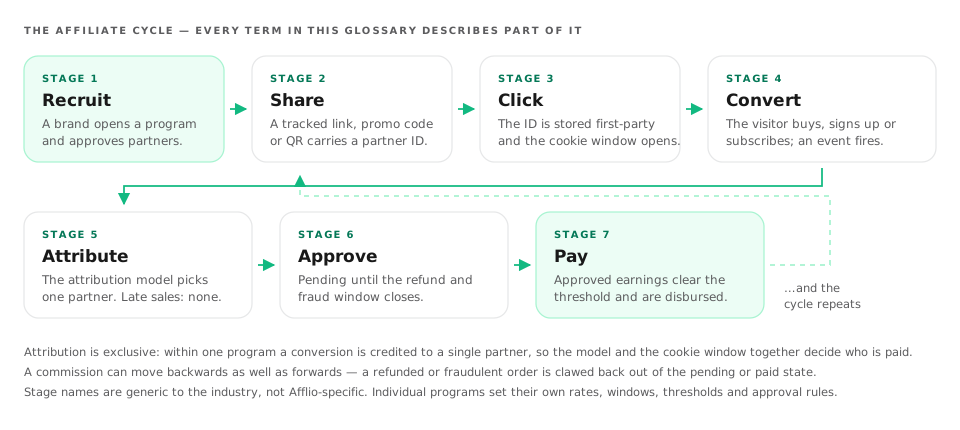
Where Sponsored Post sits in the affiliate cycle
A sponsored post buys the share stage outright: the brand pays for the placement itself rather than for anything it produces.
How Sponsored Post actually works
A sponsored post is paid content published on the creator's own channel, priced as a fee for a defined deliverable. The brief usually specifies the format, the key messages, the number of revisions, the posting window, and how long the content must stay live. Disclosure is a requirement, not an option.
The commercial difference from affiliate work is where the risk sits. The creator is paid on delivery, so a post that sells nothing still pays; equally, a post that sells extraordinarily well pays exactly the same, which is why creators with strong conversion often prefer a hybrid.
What Sponsored Post means for a creator
Sponsored fees fund production, which is what makes ambitious formats possible at all. The trade is that the upside is capped and the income stops the moment you stop publishing.
Negotiate the deliverable precisely — revisions, approval rounds, how long it stays live, and usage rights. Scope creep in these four is where a fairly priced sponsorship quietly becomes an underpaid one.
What Sponsored Post means for a brand
A sponsorship buys certainty of placement, which is the right instrument for a launch or a message that has to land on a date. It does not buy a measurable outcome, and pretending otherwise after the fact is how these relationships sour.
Adding a tracked code alongside the fee costs nothing and produces the data the next decision needs — including whether a pure-commission relationship with this creator would work.
Common mistakes with Sponsored Post
Leaving usage rights out of the agreement
Whether the brand may run the content as a paid ad, and for how long, is a separate and valuable right. Assuming it is included is the most common dispute in creator work.
Judging a sponsorship on attributed sales alone
A fee buys placement, not conversion. If sales are the objective, the deal should have been a hybrid or a commission in the first place.
Agreeing unlimited revisions
Open-ended approval rounds can multiply the work behind a fixed fee. Cap them in writing.
Sponsored Post: common questions
What is the difference between a sponsored post and an affiliate post?
A sponsored post pays a fixed fee for the placement regardless of outcome. An affiliate post pays only on the sales it drives. Hybrid deals combine a smaller fee with a commission.
Do sponsored posts need disclosure?
Yes. A paid placement is a material connection, and disclosure obligations apply to it at least as clearly as they do to affiliate links.
Can a sponsored post also carry an affiliate link?
Often, and it is usually worth doing — the tracked link or code costs nothing and produces the performance data both sides need for the next deal. Confirm the brand agrees first.
See also
- Brand Deal
A brand deal is a paid agreement between a brand and a creator to promote the brand's product, defined by deliverables, usage rights, exclusivity, timing, and a fee or commission.
- Influencer Marketing
Influencer marketing is a strategy in which brands partner with creators who have engaged social audiences to promote products, paying through flat fees, free product, affiliate commissions, or a combination.
- FTC Disclosure
An FTC disclosure is the clear, conspicuous statement a US creator or affiliate must make when they have a material connection to a brand — such as being paid or earning a commission — so audiences know the content is an ad or endorsement.
- UGC (User-Generated Content)
User-generated content (UGC) is content — photos, videos, reviews, and posts — created by customers or creators rather than the brand itself, valued in marketing because it feels authentic and trustworthy.
- Rate Card
A rate card is a creator's published pricing sheet listing what they charge for each type of deliverable — an Instagram Reel, a YouTube integration, a story, or a bundle — used as a starting point for brand-deal negotiations.
Turn the theory into a live program
Afflio handles tracking, commissions, and payouts so you can run the program these terms describe — start free in an afternoon.