Affiliate Disclosure
Updated July 2026
An affiliate disclosure is a clear notice telling readers that a link may earn the publisher a commission if they buy, required by the FTC and comparable regulators to keep affiliate recommendations transparent.
A compliant affiliate disclosure is placed where the audience will see it before acting on the links — near the top of a post or beside the links themselves — in plain language such as 'This post contains affiliate links; I may earn a commission at no extra cost to you.'
Disclosure protects both the publisher and the brand from regulatory penalties and preserves audience trust. It is the affiliate-specific application of broader endorsement rules like the FTC's guidelines and India's ASCI guidelines.
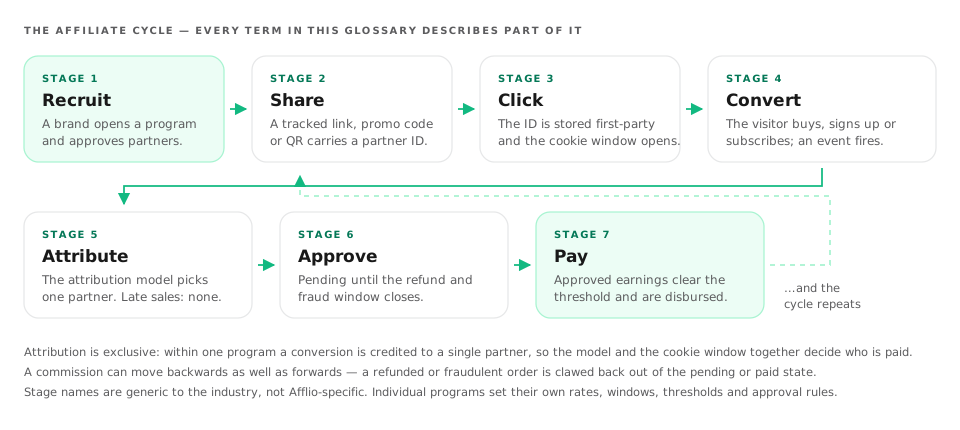
Where Affiliate Disclosure sits in the affiliate cycle
Disclosure is a share-stage obligation: it has to be present at the moment the audience encounters the recommendation, not somewhere else on the site.
How Affiliate Disclosure actually works
A disclosure tells the audience that the creator may be paid if they act on the recommendation. Advertising regulators in most major markets treat an undisclosed paid recommendation as misleading, and the consistent expectation across them is that the disclosure is clear, in the same place and format as the recommendation, and visible without any extra action from the audience.
That last condition is what most disclosures fail. A line in a footer, a page linked from a menu, text behind a more button, or a mention at the end of a long video are all technically present and all arrive after the audience has already read or watched the recommendation.
What Affiliate Disclosure means for a creator
Treat disclosure as part of the format rather than a compliance chore. A short line at the top of a post, a spoken sentence in the first thirty seconds, and a visible label on a social caption cover almost every case without damaging the content.
Audiences do not punish disclosure the way creators fear. What damages trust is discovering the relationship afterwards, which is exactly the outcome a prominent disclosure prevents.
What Affiliate Disclosure means for a brand
Brands have been held responsible for how their partners promote, which is why nearly every program's terms require disclosure. Requiring it and never checking is the worst of both positions.
The practical approach is to make compliance easy: supply approved disclosure wording, say where it must appear for each format, and spot-check live placements rather than relying on the clause alone.
Common mistakes with Affiliate Disclosure
Putting the disclosure below the recommendation
A footer note or an end-of-video mention arrives after the audience has already acted on the claim. Placement before or alongside is the whole point.
Relying on a platform tag alone
Built-in paid-partnership labels help but are easy to miss and are not always visible in every surface the content appears in. A written or spoken disclosure costs nothing to add.
Using language the audience does not parse
Ambiguous wording and unexplained hashtags do not communicate a commercial relationship. Plain language is both safer and more effective.
Affiliate Disclosure: common questions
Where does an affiliate disclosure need to appear?
Close to the recommendation and visible without extra action — before or alongside the affiliate link, early in a video, and in the caption itself on social. A site-wide disclosure page does not substitute for it.
Do I need to disclose free products as well as commissions?
Generally yes. The obligation attaches to a material connection between the creator and the brand, which includes gifted products, not only cash.
Is this legal advice?
No. This is a general description of how disclosure obligations usually work. Requirements differ by country and change, so check the rules for your own market and audience.
See also
- FTC Disclosure
An FTC disclosure is the clear, conspicuous statement a US creator or affiliate must make when they have a material connection to a brand — such as being paid or earning a commission — so audiences know the content is an ad or endorsement.
- ASCI Guidelines (India)
ASCI guidelines are the Advertising Standards Council of India's rules requiring influencers and advertisers to clearly label promotional content with disclosures like #ad or #sponsored, India's counterpart to FTC endorsement rules.
- Affiliate
An affiliate is an individual or company that promotes another business's products in exchange for a commission on the sales or actions they generate.
- Content Affiliate
A content affiliate earns commissions by creating articles, reviews, tutorials, or videos that naturally recommend products with tracked links, driving conversions through helpful, search- or audience-driven content.
- Link Cloaking
Link cloaking is the practice of masking a long, parameter-heavy affiliate URL behind a shorter, branded, or tidy link that redirects to the destination, making links cleaner, more trustworthy-looking, and easier to manage.
Sources
Turn the theory into a live program
Afflio handles tracking, commissions, and payouts so you can run the program these terms describe — start free in an afternoon.