PRM (Partner Relationship Management)
Updated July 2026
PRM, or partner relationship management, is the software and process used to recruit, onboard, manage, and grow a company's network of business partners.
PRM is to partners what CRM is to customers. A PRM platform centralizes partner onboarding, training, deal registration, co-marketing assets, and performance tracking, giving channel teams one place to manage the full partner lifecycle.
It is most associated with B2B and SaaS channel programs — resellers, referral partners, and technology partners — where relationships are higher-touch than a typical affiliate program and require structured enablement.
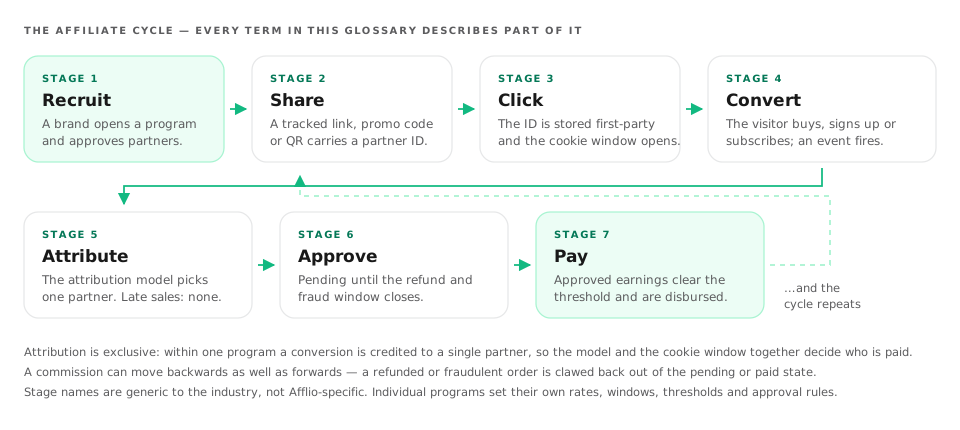
Where PRM (Partner Relationship Management) sits in the affiliate cycle
PRM is the software the recruit stage runs on once a programme has more partners than a spreadsheet can track.
How PRM (Partner Relationship Management) actually works
Partner relationship management software is to a partner programme what CRM is to a sales team. It typically holds partner onboarding and agreements, a portal where partners find assets and documentation, deal registration and its approval workflow, tier and certification tracking, co-marketing funds, and per-partner performance reporting.
What distinguishes it from affiliate software is the assumption underneath. Affiliate software assumes many partners generating many small, automatically attributed transactions. PRM assumes fewer partners generating larger, longer, human-mediated deals, which is why registration workflow and enablement content sit at the centre of it rather than link tracking.
What PRM (Partner Relationship Management) means for a creator
A creator meets PRM as the partner portal: where the agreement, the assets, the registration form and the performance reporting live. Its quality is a reasonable proxy for how seriously the company takes partners.
A portal where assets are current and registration is answered quickly is a programme worth investing time in. One where the last asset is two years old usually means the programme has no owner.
What PRM (Partner Relationship Management) means for a brand
The trigger for adopting PRM is workflow rather than partner count. Once deal registration needs approving, tiers need tracking and assets need versioning, spreadsheets start losing deals, and the losses are invisible until a partner complains.
The most common failure is buying the software instead of designing the programme. PRM automates a partner motion that already exists; it does not supply one, and an unstaffed portal is worse than no portal because partners learn nobody is behind it.
Common mistakes with PRM (Partner Relationship Management)
Buying PRM before designing the programme
The software automates a motion. Without agreed tiers, terms and a registration rule, it becomes an expensive portal nobody uses.
Using PRM for a high-volume affiliate programme
PRM is built for fewer, larger, human-mediated relationships. Affiliate software handles automated attribution and payouts at volume far better.
Leaving the portal unstaffed
Stale assets and unanswered registrations tell partners the programme is abandoned, which is a stronger signal than anything in the recruitment material.
PRM (Partner Relationship Management): common questions
What is the difference between PRM and affiliate software?
Affiliate software is built for many partners producing many small, automatically tracked transactions. PRM is built for fewer partners producing larger, longer, human-mediated deals, so it centres on registration workflow, enablement and tiers rather than link tracking.
When does a programme need PRM?
When the workflow outgrows the spreadsheet — deal registrations needing approval, tiers needing tracking, assets needing versioning. The trigger is process complexity rather than partner count.
Is PRM the same as CRM?
No, though they overlap and usually integrate. CRM manages the direct sales relationship with customers; PRM manages the relationship with the partners who bring those customers.
Can a company run an affiliate programme and a PRM at the same time?
Yes, and larger companies usually do. The affiliate software handles high-volume tracking and automated payouts for content partners, while the PRM handles registration, tiers and enablement for the smaller number of reseller, technology and agency partners. The two are complementary because they serve partner types with genuinely different needs.
See also
- Deal Registration
Deal registration is a process that lets a partner formally claim a sales opportunity so they receive credit and protection if the deal closes.
- SaaS Partner Program
A SaaS partner program is a structured program through which a software company rewards external partners — affiliates, referrers, and resellers — for driving new subscriptions.
- Multi-Tier Affiliate (Sub-Affiliate)
A multi-tier affiliate program lets affiliates earn a commission not only on their own sales but also on sales made by the sub-affiliates they recruit.
- Affiliate Marketing
Affiliate marketing is a performance-based marketing model in which a business pays external partners a commission for each customer or sale they refer.
Turn the theory into a live program
Afflio handles tracking, commissions, and payouts so you can run the program these terms describe — start free in an afternoon.