Link Cloaking
Updated July 2026
Link cloaking is the practice of masking a long, parameter-heavy affiliate URL behind a shorter, branded, or tidy link that redirects to the destination, making links cleaner, more trustworthy-looking, and easier to manage.
Instead of sharing a long tracking URL, a publisher uses a neat link like yoursite.com/go/product that redirects through the affiliate link. Benefits include better aesthetics, higher click-through, centralized link management, and the ability to update a destination without changing every published link.
Cloaking must not deceive: audiences still need an affiliate disclosure, and cloaked links should never hide that a page is an affiliate offer. Some platforms and programs restrict cloaking, so it should be used transparently and within each program's terms.
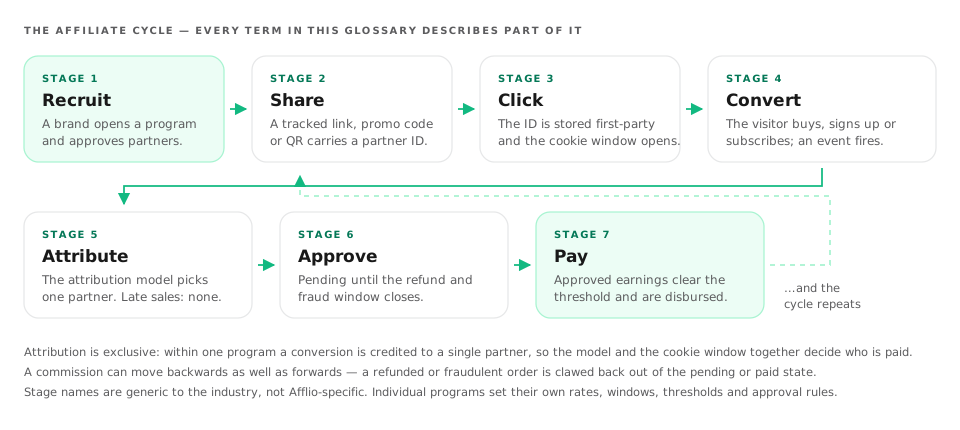
Where Link Cloaking sits in the affiliate cycle
Link cloaking is a share-stage presentation choice: what the audience sees in place of a long tracking URL.
How Link Cloaking actually works
Cloaking replaces a long tracking URL with a short, readable one on the creator's own domain, which then redirects to the affiliate link. Practically it is a redirect table: a named path on your site maps to a destination URL, and the redirect passes the visitor and the tracking parameters through.
The legitimate purpose is management rather than concealment. A named link can be repointed when a program changes network or a product is discontinued, without editing every post that used it, and it gives the creator click data of their own independent of the program's dashboard.
What Link Cloaking means for a creator
The management benefit is the real one. Programs move networks, links break, and a creator with hundreds of posts cannot realistically edit them all — a cloaked link is changed in one place.
Cloaking does not replace disclosure, and using it to hide the commercial relationship is the version regulators and platforms object to. A readable link plus a visible disclosure is the combination that is both durable and compliant.
What Link Cloaking means for a brand
Programs generally accept cloaking, but some terms restrict it, and a few platforms treat redirect chains as a spam signal. Saying plainly in the terms what is permitted saves partners from building on an approach that is later reversed.
Where cloaking is allowed, the redirect must preserve the tracking parameters end to end. A redirect that drops them unattributes the click, and the partner will usually blame the program rather than their own link shortener.
Common mistakes with Link Cloaking
Dropping tracking parameters in the redirect
A redirect configured to forward only the path, not the query string, silently removes attribution from every click.
Using a public URL shortener
Shared shorteners are blocked by some platforms, can be rewritten, and give away the control that made cloaking worthwhile. A domain you own is the point.
Treating cloaking as a substitute for disclosure
They serve different purposes. A tidy link does not tell the audience you are paid, and the disclosure obligation is unaffected by how the URL looks.
Link Cloaking: common questions
Is link cloaking against affiliate program rules?
Usually allowed, but not universally — some program terms restrict it. Check before building your whole link structure on it.
Does cloaking hurt SEO?
A redirect on your own domain to an external destination is ordinary web behaviour. What causes problems is long redirect chains and links that a platform classifies as spam, so keep the hop count to one.
Do I still need to disclose if links are cloaked?
Yes, and arguably more so. The disclosure obligation attaches to the recommendation, not to how the URL is displayed.
Should cloaked affiliate links be nofollow or sponsored?
Search engines ask that paid links carry a rel attribute marking them as sponsored, and that applies whether or not the URL is cloaked. Cloaking changes how the link looks to a human; it does not change what it is, so the attribute belongs on it either way.
See also
- Deep Link
A deep link is an affiliate tracking link that sends the customer to a specific product or page on the merchant's site rather than just the homepage.
- Affiliate Disclosure
An affiliate disclosure is a clear notice telling readers that a link may earn the publisher a commission if they buy, required by the FTC and comparable regulators to keep affiliate recommendations transparent.
- Promo Code (Coupon Tracking)
A promo code is a unique coupon assigned to an affiliate so that purchases using the code are attributed to them, even without a tracked link click.
- Attribution
Attribution is the process of determining which affiliate or marketing touchpoint should receive credit — and the commission — for a conversion.
Turn the theory into a live program
Afflio handles tracking, commissions, and payouts so you can run the program these terms describe — start free in an afternoon.