Affiliate Fraud (Click Fraud)
Updated July 2026
Affiliate fraud is any attempt to earn commissions illegitimately, such as fake clicks, forced cookies, self-referrals, or fabricated conversions.
Common tactics include click fraud (generating fake or bot clicks), cookie stuffing (dropping tracking cookies without a genuine referral), self-referrals, and creating fraudulent orders that are later cancelled. Each inflates a fraudster's earnings at the merchant's expense.
Programs defend against fraud with conversion validation, refund/clearing windows before payout, anomaly detection on click and conversion patterns, and clear terms that allow clawing back commissions tied to fraudulent activity.
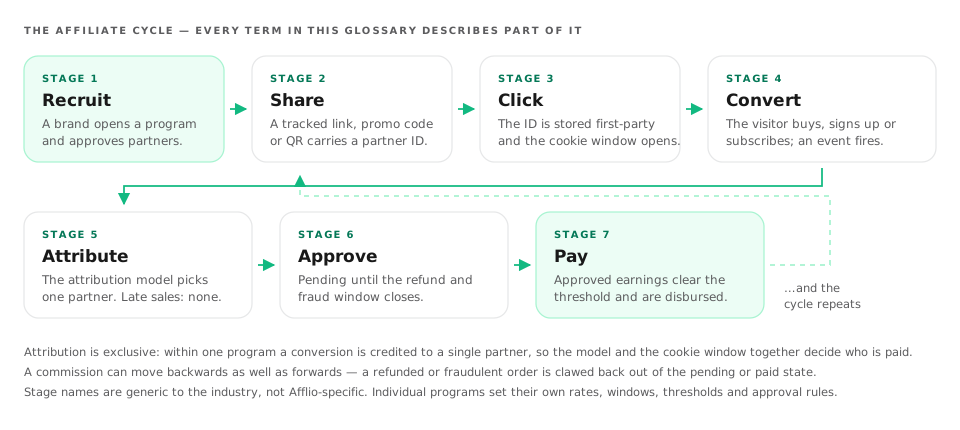
Where Affiliate Fraud (Click Fraud) sits in the affiliate cycle
Fraud is caught — or missed — at the approve stage, which is the last point at which a commission can be stopped before it becomes money.
How Affiliate Fraud (Click Fraud) actually works
Affiliate fraud is any attempt to collect a commission for a conversion the partner did not genuinely cause. The common forms are cookie stuffing, which sets tracking cookies on visitors who never clicked anything; self-referral, where the partner buys through their own link; brand-name bidding that intercepts buyers already searching for the brand; and bot or incentivised traffic that manufactures clicks and signups with no purchase intent behind them.
Detection is statistical rather than forensic. Programs look for patterns that legitimate traffic does not produce: conversion rates far outside the program norm, click-to-conversion times measured in seconds, many orders sharing a device fingerprint or shipping address, refund rates concentrated on one partner, and traffic arriving from sources that do not match the partner's stated channels.
What Affiliate Fraud (Click Fraud) means for a creator
The relevant risk for an honest partner is being caught by a blunt rule rather than committing fraud. Unusual spikes, a campaign that suddenly converts far above your norm, or traffic from an aggregator that scraped your link can all trip a review.
The defences are boring and effective: keep your own analytics so you can evidence where traffic came from, avoid incentivised placements, and tell the program before running anything unusual rather than after the review starts.
What Affiliate Fraud (Click Fraud) means for a brand
Fraud losses are rarely the headline number; the damage is that undetected fraud corrupts the data the program is steered by. A partner manufacturing conversions looks like the best partner in the program and attracts more budget.
The structural defence is timing. Approving commissions only after the refund and review window has closed means most fraud is reversed in place rather than clawed back from money already sent, and money not yet sent is far easier to keep.
Common mistakes with Affiliate Fraud (Click Fraud)
Approving commissions faster than the review window
Once money has left, recovery depends on offsetting a future payout that the partner may never earn. Speed of payout is a competitive advantage right up until it removes the only enforcement lever the program has.
Treating a high conversion rate as unambiguously good
Rates far above the program norm are as likely to indicate interception or self-referral as excellence. Investigate outliers in both directions.
Banning on a signal without evidence
Statistical anomalies have innocent explanations — a post going unexpectedly viral is one. Removing a genuine partner on an unverified flag costs more than the fraud it prevents.
Affiliate Fraud (Click Fraud): common questions
What is the most common type of affiliate fraud?
Interception rather than fabrication. Cookie stuffing, brand-name bidding and self-referral all collect commission on buyers who were arriving anyway, which is both more common and harder to detect than manufactured conversions.
How do programs detect affiliate fraud?
By looking for patterns legitimate traffic does not produce: conversions seconds after a click, many orders sharing a device or address, refund rates concentrated on one partner, and traffic sources that do not match the partner's declared channels.
Can a commission be reversed for suspected fraud?
Yes. Nearly every program reserves the right to reverse commissions and close accounts for fraud, and the review usually happens during the pending period before any money moves.
See also
- Clawback (Chargeback)
A clawback is the reversal of a previously credited affiliate commission when the underlying sale is refunded, cancelled, or charged back.
- S2S / Postback Tracking
Server-to-server (S2S) postback tracking records conversions by sending an event directly from the merchant's backend to the affiliate platform, without relying on browser cookies.
- Conversion
A conversion is the qualifying action — such as a sale, signup, lead, or subscription — that triggers an affiliate commission.
- Attribution
Attribution is the process of determining which affiliate or marketing touchpoint should receive credit — and the commission — for a conversion.
Turn the theory into a live program
Afflio handles tracking, commissions, and payouts so you can run the program these terms describe — start free in an afternoon.