Link-in-Bio
Updated July 2026
A link-in-bio is a single landing page linked from a social profile's bio that routes followers to multiple destinations — content, shops, and affiliate links — working around platforms that allow only one clickable URL in the profile.
Because networks like Instagram and TikTok permit just one link in a profile, creators use a link-in-bio page as a hub that lists everything they want to send followers to: latest videos, products, newsletters, and affiliate offers.
For affiliates and creators, the link-in-bio is a key monetization surface, often housing tracked affiliate links and a creator storefront so audience attention converts into measurable clicks and commissions.
Where Link-in-Bio sits in the affiliate cycle
Link-in-bio is a share-stage workaround for platforms that allow exactly one clickable link per profile.
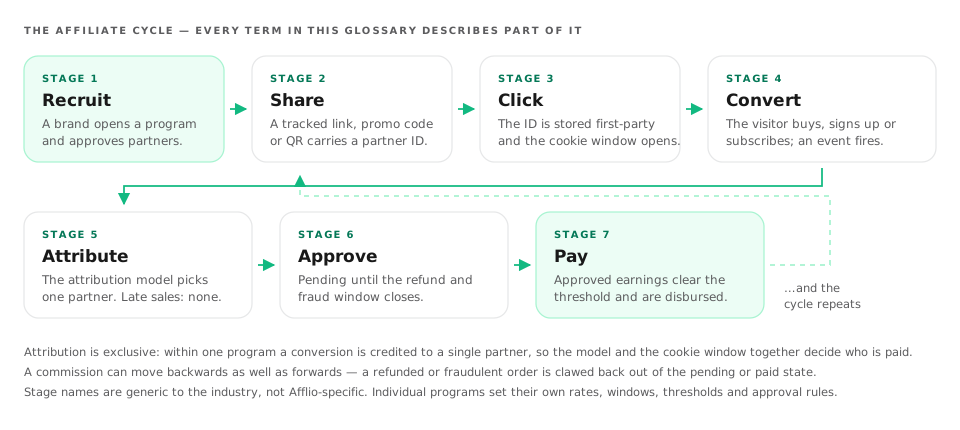
How Link-in-Bio actually works
Most social platforms permit a single link in the profile and no clickable links in individual posts. A link-in-bio page collects the destinations a creator actually wants to send people to — the current video, a product, a newsletter signup, an affiliate offer — behind that one permitted link.
The cost is a hop. Every visitor now takes two steps instead of one, and the intermediate page is where a measurable share of them decide against continuing, especially if it lists twenty options with no indication of which relates to the post they just watched.
What Link-in-Bio means for a creator
The single highest-return habit is keeping the top item aligned with the most recent post. A visitor arriving from a video about one product and meeting a list of fifteen unrelated links has been asked to do the work of finding it.
Attribution is the other half. If the page does not carry your tracking parameters through to the destination, every click through it is unattributed and the content looks like it converted nothing.
What Link-in-Bio means for a brand
For a brand, link-in-bio traffic is a known conversion loss and a known attribution risk. Supplying partners with deep links to the exact product, and a personal code for the audiences that never click at all, addresses both.
It is also why codes matter more on social than on the open web: a substantial share of the audience will never make it through the intermediate page, and a code attributes them anyway.
Common mistakes with Link-in-Bio
Leaving the page stale
A page whose top item relates to a post from two months ago converts the current audience at a fraction of the rate it should.
Losing tracking parameters through the intermediate page
If the page rebuilds the destination URL without the tracking identifier, every click is unattributed and the content appears to have produced nothing.
Listing too many destinations
Every extra option lowers the click rate on the one that matters. A short page with the current priority at the top outperforms a directory.
Link-in-Bio: common questions
Do link-in-bio pages hurt conversion?
They add a step, and a measurable share of visitors drop out at it. Keeping the page short and putting the destination matching the current post at the top recovers most of that loss.
Can I put affiliate links on a link-in-bio page?
Usually yes, subject to the program terms and the platform rules. Disclosure still applies, so the page should say plainly that some links are paid.
Why do my link-in-bio clicks not show in the program dashboard?
Almost always because the intermediate page rebuilt the destination URL without the tracking parameters. Test the full chain from profile to checkout.
How many links should the page carry?
Fewer than feels natural. The page is a menu rather than an archive, and every extra row lowers the share of visitors who reach the one you actually wanted clicked. Order by commercial intent rather than by what you posted most recently, and retire links whose programme has ended — a dead row costs you a click you would otherwise have been paid for.
See also
- Creator Storefront
A creator storefront is a personalized shop page where a creator curates and links the products they recommend — often earning affiliate commissions on sales — turning their recommendations into a shoppable, trackable destination.
- Creator Economy
The creator economy is the ecosystem of independent creators — writers, video makers, streamers, and educators — who earn a living directly from their audiences and brand partnerships, supported by platforms and tools for content, monetization, and payments.
- Deep Link
A deep link is an affiliate tracking link that sends the customer to a specific product or page on the merchant's site rather than just the homepage.
- Affiliate
An affiliate is an individual or company that promotes another business's products in exchange for a commission on the sales or actions they generate.
Turn the theory into a live program
Afflio handles tracking, commissions, and payouts so you can run the program these terms describe — start free in an afternoon.