Creator Storefront
Updated July 2026
A creator storefront is a personalized shop page where a creator curates and links the products they recommend — often earning affiliate commissions on sales — turning their recommendations into a shoppable, trackable destination.
Storefronts like Amazon Influencer pages, LTK shops, and shoppable link pages aggregate a creator's recommended products in one place. Each product carries the creator's affiliate link, so purchases attribute back and earn commission.
Creator storefronts sit at the intersection of the creator economy and affiliate marketing, giving a creator a persistent, curated shop rather than scattered one-off links, and giving their audience an easy way to buy what the creator endorses.
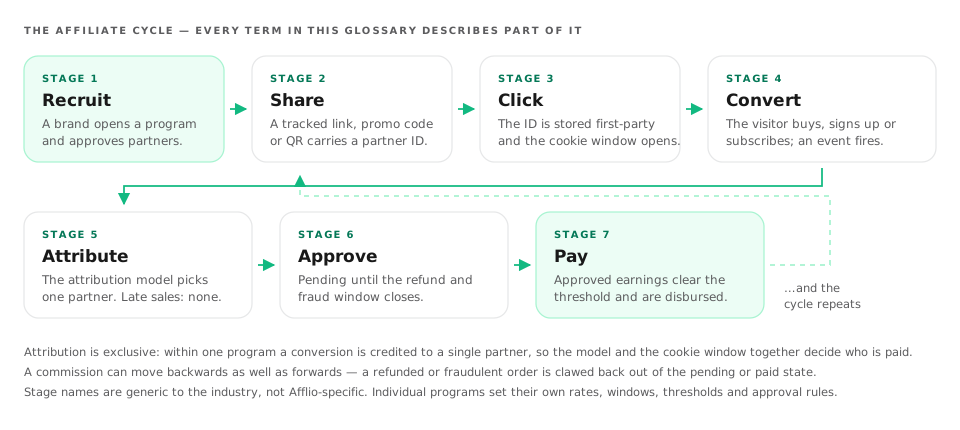
Where Creator Storefront sits in the affiliate cycle
A storefront makes the share stage persistent: a standing page of recommendations that keeps converting after the post that prompted it has scrolled away.
How Creator Storefront actually works
A creator storefront is a curated page of products the creator recommends, each carrying an affiliate link or code. Some are hosted by a marketplace, some by a creator-commerce platform, and some are simply a page on the creator's own site — and that hosting choice determines who owns the audience and the data.
Its value comes from persistence and organisation. A recommendation inside a video is discoverable only by people who watch that video; the same recommendation on a storefront is findable by anyone who wonders what the creator uses, at any point in the future.
What Creator Storefront means for a creator
The storefront is the single highest-leverage page most creators can build, because it answers the question the audience asks most often and converts the answer without any new production.
Own the page where you can. A storefront on your own domain keeps the traffic, the data and the ability to repoint links when a program changes network — none of which a hosted storefront reliably gives you.
What Creator Storefront means for a brand
Getting into a relevant creator's storefront is durable placement rather than a campaign, and it keeps converting long after the campaign that prompted it ended.
Deep links matter here more than anywhere, because storefront traffic arrives with intent already formed. A link into a home page rather than the specific product converts a decided buyer into a searcher.
Common mistakes with Creator Storefront
Listing everything rather than curating
A storefront with two hundred items is a catalogue, and the audience came for a recommendation. Fewer items, each with a reason, converts better.
Letting links rot
Discontinued products, expired programs and changed networks accumulate silently. A dead link on a storefront is a conversion that was already won and then lost.
Building only on a hosted platform
A hosted storefront can change its terms, its rates or its existence. A page on your own domain is the version you keep.
Creator Storefront: common questions
Do I need a website to run a creator storefront?
No — hosted storefronts exist on several marketplaces and creator-commerce platforms. Owning the page does give you the traffic, the data and the ability to repoint links yourself, which hosted options usually do not.
Do storefronts need affiliate disclosure?
Yes. A page of paid recommendations carries the same obligation as a post, and a clear line at the top of the page is the straightforward way to meet it.
Why do storefronts convert well?
Because the visitor arrived already asking what you recommend. Intent is formed before the click, which is the opposite of most affiliate traffic.
See also
- Link-in-Bio
A link-in-bio is a single landing page linked from a social profile's bio that routes followers to multiple destinations — content, shops, and affiliate links — working around platforms that allow only one clickable URL in the profile.
- Affiliate
An affiliate is an individual or company that promotes another business's products in exchange for a commission on the sales or actions they generate.
- Creator Economy
The creator economy is the ecosystem of independent creators — writers, video makers, streamers, and educators — who earn a living directly from their audiences and brand partnerships, supported by platforms and tools for content, monetization, and payments.
- Deep Link
A deep link is an affiliate tracking link that sends the customer to a specific product or page on the merchant's site rather than just the homepage.
- Content Affiliate
A content affiliate earns commissions by creating articles, reviews, tutorials, or videos that naturally recommend products with tracked links, driving conversions through helpful, search- or audience-driven content.
Turn the theory into a live program
Afflio handles tracking, commissions, and payouts so you can run the program these terms describe — start free in an afternoon.