Referral
Updated July 2026
A referral is a new customer or lead brought to a business by an existing customer or partner, typically tracked so the referrer can be rewarded.
Referral programs reward existing customers or partners for introducing new ones, often with a two-sided incentive (both referrer and new customer get a benefit). They overlap with affiliate marketing but are usually aimed at a brand's own customers rather than professional publishers.
Like affiliate referrals, customer referrals are tracked with unique links or codes so the right person is credited, and they convert well because they arrive with the trust of a personal recommendation.
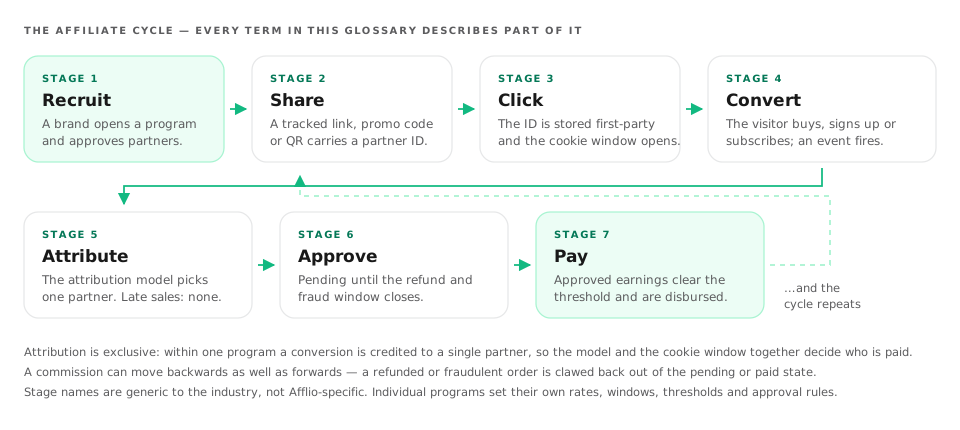
Where Referral sits in the affiliate cycle
A referral is the single act the whole cycle is named after: one person pointing another at a product, with something tying the two together.
How Referral actually works
A referral is one event, not a programme. Someone recommends a product to someone else, the recommendation carries a marker — a link, a code, a shared invitation — and the resulting signup or purchase can be traced back to who made it. Without the marker the recommendation still happens; it just cannot be credited.
The word is used loosely across three different relationships, and the distinction matters because the economics differ. A customer referring a friend is a referral programme. A partner referring a lead to a sales team is deal registration. An affiliate referring an audience they do not personally know is affiliate marketing.
What Referral means for a creator
A referral from someone the buyer actually knows converts better than any other traffic, which is why per-referral rewards are usually smaller than affiliate commissions: the conversion rate does the work the rate would otherwise have to.
For a creator the useful distinction is trust distance. Content sent to a broad audience is affiliate work; a direct recommendation to someone who knows you is a referral, and the two should not be priced or measured the same way.
What Referral means for a brand
Referred customers commonly retain better and cost less to acquire than customers from paid channels, which is what justifies rewarding them at all. The reward is usually smaller than a commission because the conversion rate is higher.
The design question is what triggers it. Rewarding on signup buys volume and invites gaming; rewarding on a first paid purchase or a retention milestone buys customers, and is what most durable referral programmes settle on.
Common mistakes with Referral
Rewarding on signup rather than on a real outcome
Signup-triggered rewards are the easiest thing in the whole model to manufacture, and the resulting accounts never become customers.
Using affiliate rates for customer referrals
The two have different conversion rates and different volumes. An affiliate rate applied to friend-to-friend referrals usually overpays for traffic that was going to convert anyway.
Not attributing the referral at all
A recommendation with no marker cannot be credited or measured, and the programme then appears to produce nothing while quietly producing customers.
Referral: common questions
What is the difference between a referral and an affiliate sale?
Trust distance and relationship. A referral is a recommendation to someone the referrer actually knows; an affiliate sale is a recommendation to an audience. Referrals convert better, which is why they are usually rewarded less per event.
Do referrals need tracking?
To be credited, yes — a link, a code or a shared invitation. The recommendation happens either way, but without a marker it cannot be attributed or measured.
Should a referral reward be cash?
Not necessarily. Account credit, a discount or an upgrade all work and often work better, because the reward keeps the referrer inside the product rather than taking money out of it.
See also
- Affiliate
An affiliate is an individual or company that promotes another business's products in exchange for a commission on the sales or actions they generate.
- Affiliate Marketing
Affiliate marketing is a performance-based marketing model in which a business pays external partners a commission for each customer or sale they refer.
- Promo Code (Coupon Tracking)
A promo code is a unique coupon assigned to an affiliate so that purchases using the code are attributed to them, even without a tracked link click.
- Multi-Tier Affiliate (Sub-Affiliate)
A multi-tier affiliate program lets affiliates earn a commission not only on their own sales but also on sales made by the sub-affiliates they recruit.
Turn the theory into a live program
Afflio handles tracking, commissions, and payouts so you can run the program these terms describe — start free in an afternoon.