Engagement Rate
Updated July 2026
Engagement rate is the percentage of a creator's audience that interacts with their content — likes, comments, shares, saves — relative to followers or reach, used as a key measure of audience quality and influence.
Engagement rate = interactions ÷ followers (or reach) × 100. A creator with 20,000 followers and 1,000 average interactions has a 5% engagement rate, which is often more valuable to a brand than a larger account with a passive audience.
Brands weigh engagement rate heavily because an engaged audience converts better and signals genuine influence. It is also used to spot fake followers: an account with many followers but very low engagement may have inflated its numbers.
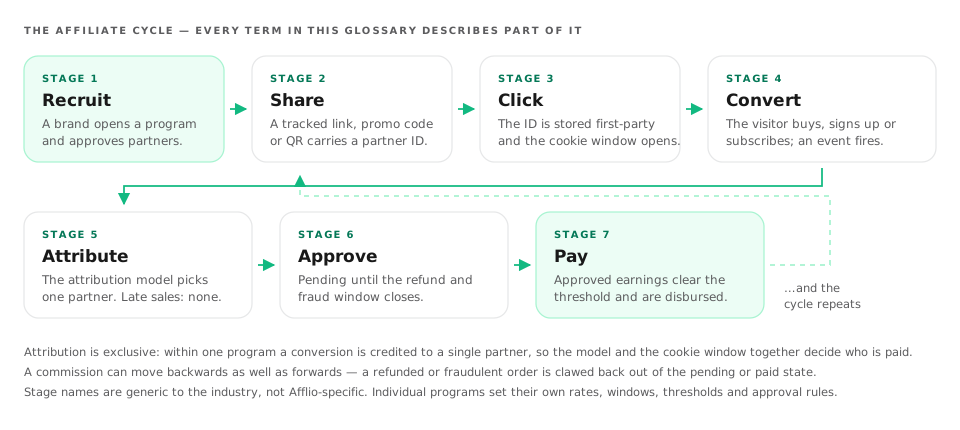
Where Engagement Rate sits in the affiliate cycle
Engagement rate describes the share stage from the audience side: how many of the people a post reached actually did something with it.
How Engagement Rate is calculated
engagement rate = interactions ÷ denominator × 100
- interactions
- likes, comments, shares, saves — which ones count varies by definition
- denominator
- followers, reach or impressions, and the choice changes the answer entirely
- per post vs per account
- an account rate is the average of post rates, not a separate measure
- saves and shares
- the strongest commercial signals, and the ones most often left out
Worked example (illustrative)
A post with 900 interactions on 30,000 followers is a 3 percent rate by followers. The same post, reaching only 12,000 people, is 7.5 percent by reach — the same post, two very different numbers, which is why the denominator has to be stated.
The figures above are a chosen illustration of the arithmetic. They are not a measured result, a typical result, or a projection of what any program pays.
What Engagement Rate means for a creator
Engagement rate is the number brands ask for and the one with the least standardised definition, so state your denominator whenever you quote it. A rate by reach is not comparable with a rate by followers, and quoting the flattering one without saying which invites a correction later.
For affiliate work it is a weak predictor on its own. Saves and shares correlate with purchase intent far better than likes do, and a smaller audience with high saves routinely out-earns a larger one with high likes.
What Engagement Rate means for a brand
As a screening metric it is useful for spotting inflated followings, because purchased followers do not interact. As a predictor of sales it is much weaker than earnings per click, which measures the thing the brand is actually buying.
Where a brand asks for it, asking for the denominator in the same breath removes most of the ambiguity, and asking for saves and shares separately gets closer to the signal that matters.
Common mistakes with Engagement Rate
Comparing rates computed on different denominators
By followers, by reach and by impressions produce very different numbers from identical performance. The comparison is meaningless without the definition.
Treating it as a sales predictor
Interaction is not intent. An account with high engagement on entertainment content may convert far worse than a smaller account with commercial intent.
Comparing across platforms
Each platform counts interactions and reach differently, and typical rates differ by an order of magnitude. The comparison only works within one platform.
Engagement Rate: common questions
What is a good engagement rate?
There is no figure worth quoting across platforms, because the counting rules and typical ranges differ enormously. The only useful comparison is against your own past posts on the same platform and format.
Should engagement rate be calculated on followers or reach?
Both are used. By reach describes how compelling the post was to the people who saw it; by followers describes how well the account holds its audience. State which you mean.
Does high engagement mean high affiliate earnings?
Not reliably. Saves and shares predict purchase intent much better than likes, and earnings per click is the only figure that measures what a brand actually gets.
See also
- Reach vs Impressions
Reach is the number of unique people who saw a piece of content, while impressions count the total times it was displayed including repeat views — so impressions are always equal to or greater than reach.
- Media Kit
A media kit is a creator's promotional summary — audience size, demographics, engagement rate, past brand work, and rates — shared with brands to win partnerships, functioning like a portfolio and pitch in one document.
- Influencer Marketing
Influencer marketing is a strategy in which brands partner with creators who have engaged social audiences to promote products, paying through flat fees, free product, affiliate commissions, or a combination.
- CTR (Click-Through Rate)
CTR, or click-through rate, is the percentage of people who click a link or ad out of those who saw it, calculated as clicks divided by impressions, measuring how compelling a link, ad, or promotion is.
- Affiliate Fraud (Click Fraud)
Affiliate fraud is any attempt to earn commissions illegitimately, such as fake clicks, forced cookies, self-referrals, or fabricated conversions.
Turn the theory into a live program
Afflio handles tracking, commissions, and payouts so you can run the program these terms describe — start free in an afternoon.