Rate Card
Updated July 2026
A rate card is a creator's published pricing sheet listing what they charge for each type of deliverable — an Instagram Reel, a YouTube integration, a story, or a bundle — used as a starting point for brand-deal negotiations.
Rate cards bring transparency and speed to influencer deals: brands can see roughly what a collaboration will cost before reaching out, and creators avoid renegotiating from scratch each time.
Prices typically reflect audience size, engagement rate, niche, and usage rights, and a creator may quote higher for exclusivity or ad whitelisting. Rate cards are a starting point, not a fixed ceiling — final terms often bundle deliverables or blend a fee with affiliate commission.
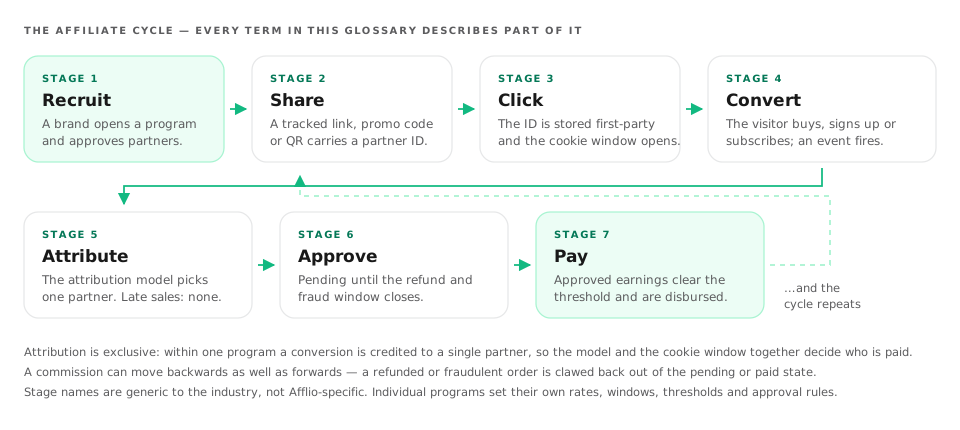
Where Rate Card sits in the affiliate cycle
A rate card is a recruit-stage price list: what a creator charges for each deliverable before any negotiation starts.
How Rate Card actually works
A rate card lists deliverables and their prices — a feed post, a short video, a newsletter placement, a bundle — and usually separates the base fee from the things that legitimately cost extra: usage rights, exclusivity, extended licensing, revisions beyond a set number, and rush turnaround.
Those add-ons are where most disputes originate. Usage rights in particular are frequently assumed rather than agreed: a brand that intends to run the content as a paid ad for six months is buying something quite different from a single organic post, and the price should reflect it.
What Rate Card means for a creator
The commercial function of a rate card is to anchor the negotiation and to stop you improvising a number under pressure. It also lets you price a hybrid honestly: a lower fee plus commission is a visible discount against a stated base rather than a vague concession.
Price usage rights separately and explicitly. Content repurposed into paid media works far harder than an organic post, and a rate card that does not distinguish them ends up selling the expensive version at the cheap price.
What Rate Card means for a brand
A published rate card speeds up sourcing and removes a round of back-and-forth. The figure to evaluate it against is not the absolute price but the cost per thousand of the creator's actual reach, and the expected affiliate contribution alongside it.
Be explicit about usage rights in the brief rather than assuming them. It is the most common source of a partnership souring after the content is delivered.
Common mistakes with Rate Card
Bundling usage rights into the base rate
Running content as a paid ad for months is a different product from a single organic post. Priced together, the expensive one is being given away.
Pricing purely on follower count
It ignores audience fit and conversion, which is where a smaller, well-matched creator justifies a higher price than reach alone would suggest.
Treating the card as non-negotiable in both directions
A rate card is an anchor, not a tariff. Long-term and multi-deliverable deals reasonably price differently from a one-off.
Rate Card: common questions
What should a rate card include?
Each deliverable and its price, plus separate line items for usage rights, exclusivity, extra revisions and rush turnaround. The add-ons are where most of the disputes happen.
How do I price usage rights?
As a multiple of the base fee, scaled by duration and by where the content will run. Paid media usage is worth substantially more than organic reposting, and unlimited perpetual rights more again.
Should affiliate commission replace a rate card?
Not usually. A hybrid — a reduced fee plus commission — funds production while keeping the upside, and the rate card is what makes the reduction visible as a real concession.
See also
- Brand Deal
A brand deal is a paid agreement between a brand and a creator to promote the brand's product, defined by deliverables, usage rights, exclusivity, timing, and a fee or commission.
- Media Kit
A media kit is a creator's promotional summary — audience size, demographics, engagement rate, past brand work, and rates — shared with brands to win partnerships, functioning like a portfolio and pitch in one document.
- Sponsored Post
A sponsored post is social or blog content a creator is paid to publish promoting a brand, which must be clearly disclosed as an ad under FTC and comparable rules.
- Influencer Marketing
Influencer marketing is a strategy in which brands partner with creators who have engaged social audiences to promote products, paying through flat fees, free product, affiliate commissions, or a combination.
- CPM (Cost Per Mille)
CPM, or cost per mille, is the price an advertiser pays per one thousand impressions of an ad or sponsored content, a standard way to price awareness-focused campaigns and influencer posts.
Turn the theory into a live program
Afflio handles tracking, commissions, and payouts so you can run the program these terms describe — start free in an afternoon.